Understanding Severe Myalgic Encephalomyelitis (ME) in Ireland
 |
| Image by Greg Crowhurst |
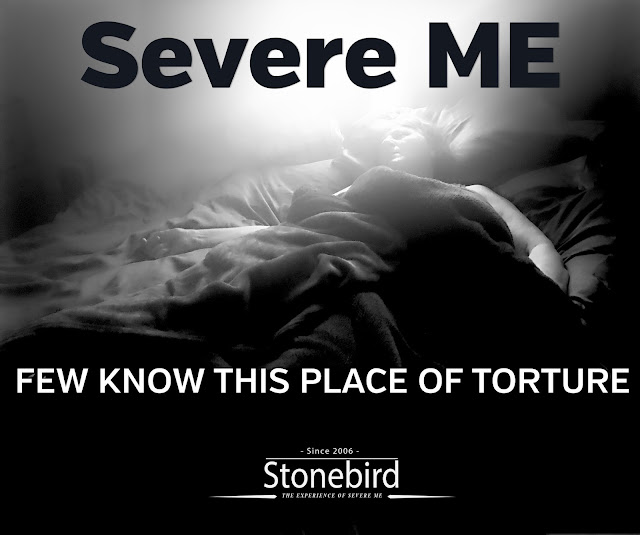
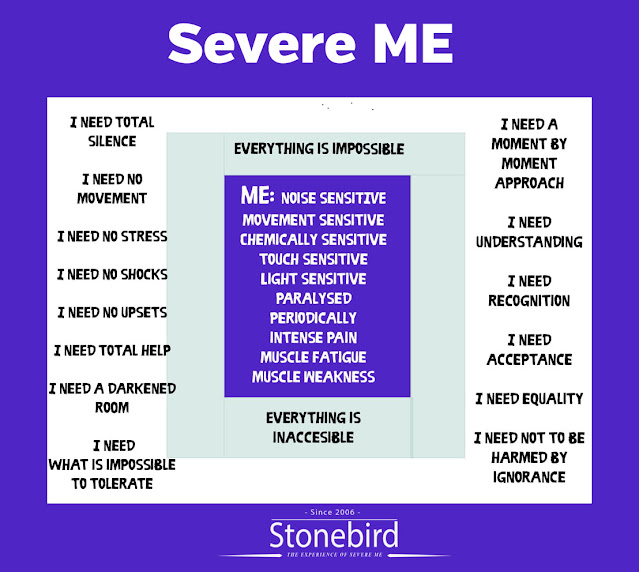
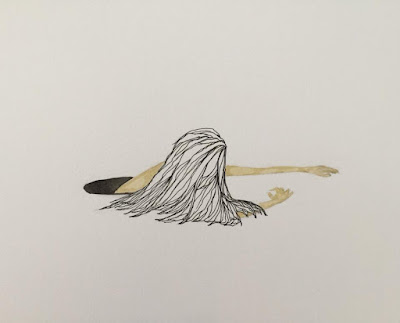
The patients in the Severe ME category include those with Severe, Very Severe and Profound ME. People in these categories lie motionless in darkened rooms suffering horrendous never ending symptoms that can make movement, communication, activity and their care impossible.
Some patients with severe ME are wasting away in bed living a ghastly existence hour by hour; some have to be tube fed, are hypersensitive to an unimaginable degree, so hypersensitive that the slightest wrong movement the carer or any visitor makes can be devastating.
People with severe ME suffer from
extreme all over multi-level pain, multiple sensitivities, periodic transient paralysis, (in some cases it is a cardinal symptom), blood pressure and heart issues, muscle weakness, numbness, cognitive
dysfunction, visual difficulties, muscle spasms, gut
issues, sleep issues.... their body is in chaos, burning and throbbing in pain.
The experience of the person with severe ME is not obvious at all - snapshots, photos, seeing the person when they have a short period of perceived wellness contributes to misunderstanding. The experience of the person with severe ME needs to be learned slowly and understood as much as possible so that appropriate caring of any kind can take place, including medical care. The carer, the healthcare worker, the home supports, the patient's doctor and others have to remember that with severe ME in particular there will always be a post exertional response that has to be considered ahead of any support or medical care.
The cardinal feature of ME is Post Exertional Neuro Immune Exhaustion (PENE) as per the International Consensus Criteria (ICC 2011). PENE occurs very easily in people with Severe ME, it could be as simple as a response to someone entering the patient's bedroom, a response to movement and noise which cannot be tolerated. Or a response to someone's perfume or light coming through the window.
More than sixty distinct symptoms have been documented in Severe Myalgic Encephalomyelitis (ME), several of which are unique to the disease.
Taking the above mentioned symptoms on board it is impotant that fatigue is not considered a defining nor essential symptom of ME. Fatigue is most definitely not a defining nor essential symptom of Severe ME. Fatigue is entirely the wrong word to associate with any severity of ME, it does not describe the horrendous poisoned state of illness.
PEM occurs in other illnesses but PENE is unique to ME and is very clearly defined in the ICC.
 |
| Image by Greg Crowhurst |
The situation with Severe Myalgic Encephalomyelitis (ME) in Ireland is that:
- there are 100s of people with severe ME barely living and without appropriate healthcare
- there are many lying in bed disabled and unable to move, unable to do something as simple as brushing teeth or getting to the bathroom without assistance
- there are those who cannot tolerate visitors including carers which makes caring very difficult and leaves the person with ME alone in silence in a darkened room
- there are some who cannot eat because of gut issues, who cannot tolerate hospitalisation or visiting medics so they go without appropriate care for their medical needs, lose weight and become dangerously malnourished and under weight
- there are those who when they have to be hospitalised end up with inappropriate care, can be abused and gaslighted by medics who are unaware of the severity of symptoms and unaware of the consequences for the patient to be in a noisy and busy hospital
- there are no Irish guidelines for Severe ME (or any category of ME) for adults and paediatrics
- there is a lack of interest by the HSE to adopt rigourous criteria, i.e., the International Consensus Criteria & Primer until Irish guidelines have been developed
- there's no inclusion of Severe ME in medical teaching (or any category of ME)
- there's little to zero knowledge among health professionals
- there are no trained health professionals
- there's no GP awareness
- there's no national lead for ME despite the severe, very severe & profound categories
- there's no clinical care pathway for adults and paediatrics
- there's no follow on healthcare pathway for children who turn18 if they have received any type of support* from a medic as a child (*most supportive medics have been educated about ME by the parents and other advocates on behalf of the child)
- there are delays in diagnosis, or there's misdiagnosis, leading to a more severe form of ME
- there's no information re management and treatment once a person receives a diagnosis
- there are severe ME patients putting up with abuse, neglect and gaslighting by
medics who won't admit to their lack of knowledge and who have no idea of the effects onthe patient with regards to the post exertional response
- there's difficulty accessing welfare support and other community
services due to lack of knowledge & guidelines across CHOs, and due to lack of recognition of ME as a disability.....suffering from severe ME can necessitate a family member, friend or carer to do the paperwork for the person in their care
- there is lack of consistency across the different CHO areas with regards to how applications for supports for ME patients are managed and the supports awarded
- there are delays accessing home care supports after patients are awarded supports
- there is lack of knowledge of the severity of symptoms and the horrendous potential effects of visiting carers and other community workers on the person with severe ME
- there is lack of cover when carers cannot attend due to illness/holidays/other, often leaving the person with ME without meals and essential care
- there is no support policy for under 65s and supports awarded are at the discretion of the home support team; disability is taken into account but again at the discretion of the support team
Despite Myalgic Encephalomyelitis (ME) affecting thousands of people in Ireland, of which 25% have a severe form and 2% have very severe ME, clinicians lack the knowledge to appropriately diagnose or manage ME. Unfortunately, clinical guidance has been scarce, obsolete, or potentially harmful. Consequently, patients remain undiagnosed, and those with a diagnosis often receive inappropriate treatment.
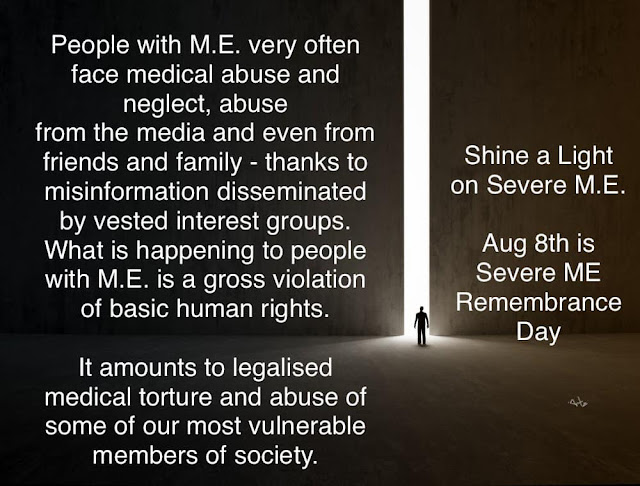
The above issues listed are not limited and perpetually exist because of the lack of willingness by the HSE to bring relevant stakeholders together to produce guidelines and to equally involve the experts, i.e., the ME patients and patient partners (reps). We need to see an end to the mistreatment and abuse of people with ME, especially those with severe ME, including children who have suffered from similar experiences to adults, those who have been threatened with removal from their families and coerced into damaging treatments.
We need to get
recognition and education about ME across all community healthcare services - for
patients to be accorded the same basic human rights given to other illnesses.
For that to happen ME guidelines must be developed by the HSE, guidelines that
truly capture the illness and the issues experienced by people with severe ME.
 |
| Image by Wendy Boutillier/Artz Studios |
There needs to be a partnership between the HSE and ME patients, or others who represent patients too severe to advocate for themselves.
The public
and patient partnership we have experienced in other areas of the HSE has met expectations of
patients being involved in policy and organisational decision making, it has
shown positive partnership with patients and the public and inclusion in
participatory spaces that share decision-making power to inform design and
policy, an important process that could is
essential to bring about relevant policy for the Myalgic Encephalomyelitis (ME)
community in Ireland.
There has to be shared responsibility, where patient and
public representatives, health care professionals, academics, and leaders work
in partnership, successfully embracing essential public and patient involvement
– a person-centred healthcare culture set up with the purpose of
increasing understanding of the patients needs and essential to creating a more
responsive policy and greater health equity for people with ME.
We join a
public call on the HSE to develop guidelines for adults and children with Myalgic Encephalomyelitis (ME), across all severities, and to include the expert patient voice to ensure inclusion of those with
severe ME including very severe and profound ME.
Untold morbidity, unspeakable suffering - until we address the glaring holes in our understanding and the forces that prevent us doing so, we will not move forward.
 |
| Image by Alison/Alistepha Art |
Many thanks to Greg Crowhurst, Wendy Boutillier/Artz Studios, Alison/Alistepha Art, for your images


